To create our studio logo, we used an app called 'Hyperlapse' and filmed a busy main road at night. The app was then able to speed up the video and gave it a fast motion effect. We then slowed down the hyperlapse so it created a slow motion video of the cars which made the lights appear as though they are blurred although you could still tell that the cars were travelling at a speed. We then used movie maker on Ipad and added over the video that said 'Headlight Productions' which is the name of our production company. We then rewound the video so it became difficult to see which direction the cars were travelling in which gave the desired effect of blurred headlights in the night.
Tuesday, 15 December 2015
My studio logo 'Headlight productions'
To create our studio logo, we used an app called 'Hyperlapse' and filmed a busy main road at night. The app was then able to speed up the video and gave it a fast motion effect. We then slowed down the hyperlapse so it created a slow motion video of the cars which made the lights appear as though they are blurred although you could still tell that the cars were travelling at a speed. We then used movie maker on Ipad and added over the video that said 'Headlight Productions' which is the name of our production company. We then rewound the video so it became difficult to see which direction the cars were travelling in which gave the desired effect of blurred headlights in the night.

Monday, 14 December 2015
Stereotypical Representations of characters from the Horror genre
Many horror films have the same/similar characteristics for antagonists. For example, 'Dracula', which was made in 1931 by Bram Stoker created representations of what he believed to be 'a monster'. Some of these representations have been developed and changed and have now stuck in Hollywood and are stereotypically used in other films made to do with Dracula. Some of these stereotypes include the black clothing, complete with a cape, the pale skin and dark slicked back hair, sleeping in a coffin, not being able to go out in the day or look in the mirror and being afraid of garlic. Stoker created this representation of the character as it is what he believed Dracula should be like. The film was a hit in Hollywood and created a lot of profit for the studio which is why other film studios decided to recreate the film to gain a profit and thus, the stereotype of 'Dracula' was created. The same happened with the character of frankenstein, which was first created in Mary Shelley's book - 'Frankenstein' in 1818. The book later was turned into a film in 1910 where a monster was created from a lot of different body parts. The reality of this would be very grim and dark but the film turned it into more of a comedic character who had metal bolts screwed into his head and had a green skin tone. This also seemed to become fairly popular and the stereotype which has been created has stuck and is now used worldwide.
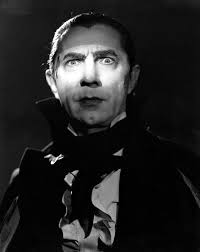


Although many production companies use this stereotype of a vampire, there are films that have challenged this to suggest that they are not antagonists and can be normal people like anyone else. An example of a film that has twisted the stereotype would be 'The Twilight Saga'. The writer of the books, Stephanie Mayer suggested that a vampire is like any other normal person and that the only difference is that they have to live off human blood.
However, she did stick with the stereotype that they have very pale skin and red eyes.

Another stereotypical representation of antagonists in the horror genre would be the middle aged man who has had a rocky childhood/ an event in his life that has made him turn into a killer or psychopath. This character is usually a straight male rather than a female to show the dominance of the male population. However, it may be interpreted as others as portraying males to be antagonists and the women as being superior. Examples of typical antagonists in horror films could be characters such as 'Hannible Lector' in Silence of the Lambs or 'Jason Voorhees' from the film 'Friday the 13th'.
Maltese Falcon Film Noir Textual Analysis
‘The Maltese Falcon’ is a film noir that is set in the 1940’s
and made in 1941. We know that is a film noir as it has all of the basic
conventions of one. These would include things such as the main hook or enigma,
which in this case is a crime investigation, it plays with the good cop/bad cop
storyline as the main detective, ‘Detective Sam Spade’ and his partner,
Detective Miles Archer are working on a case that involves a young and
beautiful woman, who plays the ‘Femme Fatale’ and they are looking for a man
who supposedly has taken Mrs Wonderly (the Femme Fatale)’s sister. In the end,
Miles ends up being killed and Sam begins to show his true colours.
 The femme
fatale, in this film noirs case – Mrs Wonderly is a young woman who is usually
a ‘damsel in distress’. Her character is one that both of the detectives swoon
over which instantly in the film we see that both detectives will end up
arguing about her. She claims to be scared for her sister’s safety when a man
called ‘Thursby’ claims to have taken her and will not let her see her sister.
She pleads for the men’s help in finding her. During the scene where she enters
the office, there is a medium close up shot of Mrs Wonderly where she is
speaking to the men about her sister, however throughout this scene she is
unable to look either of the men in the eye which suggests that there is an
underlying issue that she may be trying to hide. This gives the audience an
insight on what is going to happen before the people in the film know. This is
an example of dramatic irony which does not happen very often in a film noir as
they usuaslly have restricted narration – where the audience knows only as much
as the detective. The suggestion that Mrs Wonderly is a femme fatale shows the
representation of women at the time. We see that women were inferior to men at
the time, there is another point in the film when Miles walks into the office
and both men stand up but Mrs Wonderly is left sitting that we see that she is
smaller than/inferior to the men. This may also give the audience an idea that
the film was very misogynistic as it portrays the woman to be the bad guy/ the
killer. The femme fatale is always the character in a film noir that gets the
men to do her dirty work for her and then ends up either dead or in jail.
The femme
fatale, in this film noirs case – Mrs Wonderly is a young woman who is usually
a ‘damsel in distress’. Her character is one that both of the detectives swoon
over which instantly in the film we see that both detectives will end up
arguing about her. She claims to be scared for her sister’s safety when a man
called ‘Thursby’ claims to have taken her and will not let her see her sister.
She pleads for the men’s help in finding her. During the scene where she enters
the office, there is a medium close up shot of Mrs Wonderly where she is
speaking to the men about her sister, however throughout this scene she is
unable to look either of the men in the eye which suggests that there is an
underlying issue that she may be trying to hide. This gives the audience an
insight on what is going to happen before the people in the film know. This is
an example of dramatic irony which does not happen very often in a film noir as
they usuaslly have restricted narration – where the audience knows only as much
as the detective. The suggestion that Mrs Wonderly is a femme fatale shows the
representation of women at the time. We see that women were inferior to men at
the time, there is another point in the film when Miles walks into the office
and both men stand up but Mrs Wonderly is left sitting that we see that she is
smaller than/inferior to the men. This may also give the audience an idea that
the film was very misogynistic as it portrays the woman to be the bad guy/ the
killer. The femme fatale is always the character in a film noir that gets the
men to do her dirty work for her and then ends up either dead or in jail.
The establishing shot which is set in the city of San
Francisco is very stereotypical to a film noir/ crime film. We also see that
the office is set in the city and the audience suspects that it is set in a
block of offices as we cannot see anything but sky out of the windows in the
office. Slightly later on in the film, we see Detective Spade’s apartment/flat.
It is very simple and we see that he does not have very much money as he lives
in an apartment and when the detectives come to question him about the murder,
he only has a small seat for them to share and he sits on his bed (which isn’t
made). This indicates that he is a very busy man and does not have time for
anything outside of work which could also be why there is no woman present.
The sound in the film is mostly diegetic as there is a lot of
dialogue between the two detectives and Mrs Wonderly. However after Detective
Archer is killed, there is a piece of music (non-diegetic) over the top of the
dialogue and film. This piece of music was mysterious and indicated that the
chase was now on, to find out who it was that killed Archer.
The editing in the film is very simple and is called
continuity editing. This is where each shot must follow each other to make the
film look as though it flows. During the time that the film was set and written
in, there was not very much advanced editing for films (which is part of why
the film noir genre exists). So the lighting is very low key to add the effect
of the black and white film noir. There are no tricks or colour editing in the
film which is why it is simple and called ‘continuity editing’.
 Both of the
detectives are very stereotypical to the film noir genre. We see this as soon
as the film starts when Detective Spade begins to roll a cigarette in his office,
this indicates that the film was made around that time as usually, people
wouldn’t smoke inside, especially if they have guests as it is considered
dangerous and rude. Again, this is another indication that Spade is very
relaxed and emotionless as he doesn’t really seem to care, we also see this
when Mills walks into the room when Spade is speaking to Mrs Wonderly.
Instantly, Archer is swooning over Wonderly and he doesn’t hide it even though
he has a wife whereas Spade is very collected and relaxed although we still see
that he shows some interest in her. When Archer is killed and Spade goes out in
the middle of the night to see what happens, he is wearing a suit with a trilby
hat and an overcoat/mac. This is a stereotypical attire for characters such as
detectives in Film noirs. Mrs Wonderly also describes Floyd Thursby to have
‘Dark hair and Bushy eyebrows’ and to be wearing a ‘Grey suit and hat’. This is
again a stereotype of the detectives at the time but it could also be Mrs
Wonderly suggesting that the detectives are just like any other bad gut which
indicates that she has an underlying plot against them.
Both of the
detectives are very stereotypical to the film noir genre. We see this as soon
as the film starts when Detective Spade begins to roll a cigarette in his office,
this indicates that the film was made around that time as usually, people
wouldn’t smoke inside, especially if they have guests as it is considered
dangerous and rude. Again, this is another indication that Spade is very
relaxed and emotionless as he doesn’t really seem to care, we also see this
when Mills walks into the room when Spade is speaking to Mrs Wonderly.
Instantly, Archer is swooning over Wonderly and he doesn’t hide it even though
he has a wife whereas Spade is very collected and relaxed although we still see
that he shows some interest in her. When Archer is killed and Spade goes out in
the middle of the night to see what happens, he is wearing a suit with a trilby
hat and an overcoat/mac. This is a stereotypical attire for characters such as
detectives in Film noirs. Mrs Wonderly also describes Floyd Thursby to have
‘Dark hair and Bushy eyebrows’ and to be wearing a ‘Grey suit and hat’. This is
again a stereotype of the detectives at the time but it could also be Mrs
Wonderly suggesting that the detectives are just like any other bad gut which
indicates that she has an underlying plot against them.
The running theme of the film noir is a crime investigation.
In this film noir, it uses private detectives and detectives rather than police
as it allows the director to be inventive and creative as detectives are
allowed to do much more digging and do more dirty work than police. The
character or Spade takes on this persona and as we later find out has a lot of
secrets and is hiding a lot as he is supposedly having an affair with Miles’
wife which is why he does not phone her directly when he was killed. When he
went to the scene of Miles’ murder, Sam declined seeing the body before it was
taken away and did not speak directly to Miles’ wife. This would then raise
suspicions with the police as it is made to look as though it was Spade that
killed Miles. This scene shows us that there is more than meets the eye with
Sam as he is a very secretive and emotionless character in the film. This again
has the conventions of a film noir as there is always a problem with the main
characters. We also see that the femme
fatale, (Mrs Wonderly) is English. At the time, English people were considered
as very classy and posh. If the character or Mrs Wonderly spoke with a New York
or Jersey accent, she would not be treated the same as how she is treated
because she is English. The English were considered to be very classy and of a
high status so were treated with respect in America which is why both of them
men swooned over her in the film and she was treated with respect and as a
lady. This is also one of the reasons that neither of the detectives suspected
that she would be an antagonist because she seemed classy and respectful so
would not be assumed to be a killer.
In
conclusion, The Maltese Falcon has many elements of a film noir such as the
stereotypical manner of the detectives, (the trilby, suit and overcoat), the
‘Femme fatale’, (the female character that begins being beautiful and innocent
but ends up being the spider with the web and either ends up dead or in jail),
The setting of the city, the black and white film and low key lighting to add
effect and the storyline of the good cop/bad cop crime investigation
Wednesday, 9 December 2015
The script for my Opening Scene (To Kill A Dead Girl)
TRANSITION IN
STUDIO LOGO FADES IN/OUT
INT. House/living room. The room is dark but the lighting is natural. Camera pans on to features of a dead body (lucy) -covered in blood. [Title screen begins]
Her arms are bruised and her legs are cut.
Camera then pans to her face and slowly gets closer until it is just focusing on her eyes - they are closed to show that she is dead.
Transitions to her opening her eyes, but she is in a different room - appears to be waking up. (rewind to before she was dead.)
She puts her feet over the side of her bed, turns off her alarm and puts on some slippers. (shows normality - how her morning routine is the same as anyone else. She appears to be a normal, average girl.)
Forward tracking on camera - follows her into bathroom. She plays with her hair and turns around so that she can see that she is not bruised to then transition into a filtered shot which appears as a flashback. We see the character covered in bruises and clearly upset, SAME FILTER AS OPENING. [title sequences here]
Filter returns to normal, signifying back to normality.
We next see her in the kitchen, she is fully dressed with her hair tied in a tight ponytail and has make up on. She proceeds to get a glass out of the cupboard but puts it down onto the counter with a thud.
[Sound effect of glass banging].
[FILTERED SHOT] - flashback
She falls to the floor - a loud bang (the same as the sound of the glass). she tried to get up but is disorientated - Slow motion for added tension.
[Sound effects - sound of a hearbeat in the background with a buzzing noise to show that she is frail and in pain.]
Camera fades to black. FADE IN - she grabs the key off the side but hesitates/pauses before she picks it up. Another flashback [FILTERED] Character is being strangled and her throat is being cut with the same key - clearly a male strangling her. Blood is pouring down her throat.
Black screen
[Back to reality] character grabs key and locks door - as the door closes the shot ends and the title screen shows.
Tuesday, 8 December 2015
Mr Judge Feedback
Please see previous feedback on essential tasks that need completing including the Seven analysis, horror opening analysis and stereotypical representations of gender
Also in addition we need your class evidence of designing studio logos, title sequence order evidence and your assessment of data from the BFI statistical yearbook 2014 (pages 34-41)
http://www.bfi.org.uk/statisticalyearbook2014/
Also in addition we need your class evidence of designing studio logos, title sequence order evidence and your assessment of data from the BFI statistical yearbook 2014 (pages 34-41)
http://www.bfi.org.uk/statisticalyearbook2014/
Monday, 23 November 2015
Christian Metz model of genre development.
Christian Metz model of genre development (4 phases of
development)
Research into existing products-horror genre. Textual
analysis.
Christian Metz made the ‘model of genre development’ which
was later named the ‘Metz theory’. This declared that all films of the horror
genre have four ‘phases’ of horror.
·
Phase 1: The experimental phase.
·
Phase 2: The classic.
·
Phase 3: The parody.
·
Phase 4: The deconstruction.
Phase 1 is the experimental phase. For a horror, this is
when the film is first made to see whether or not it will be popular in the film
industry, it is testing the waters to see whether this specific genre will be
successful and make a profit for the production company. An example of a film
made in the experimental phase would be ‘The cabinet of Dr Caligari’. This is a
film based on the book ‘Dr Jekyll and Hyde’ which was published in 1886 by
Robert Louis Stevenson. It is a silent German horror film made in the 1920's (during WWI) about a deranged hypnotist who manipulates another person to commit murders for him.

Phase 2 is the classic phase. The classic phase is created using the codes and conventions of the genre, (in this instance, horror). One of the 5 production companies such as Paramount, Warner Bros, 20th Century Fox, Metro-Goldwyn-Mayer or RKO pictures produces the film and some have turned out to be iconic and popular in hollywood. An example of a classic film would be 'Dracula' which is based on the book by Bram Stoker called 'Dracula', made in 1897. The classic film became a very influential and iconic image which from this, created a lot of stereotypes for the typical antagonist in a horror film. Dracula is now seen as a very pale middle aged male with a mild European accent. He stereotypically has dark hair, wears a long black cape, has fangs, drinks blood and cannot walk in sunlight. This stereotype is now used throughout TV and film around the world.

Phase 3 is the parody phase. This is when a spoof is made of the classic film. An example of a parody would be 'Vampires suck' which is based on the Twilight sagas (which were originally a series of books created from the 'Dracula' classic). The parody was when comedic effects were added to the original film and an ironic pun is added to the name. The word 'sucks' in the movie title 'Vampires suck' is a play on words as vampires stereotypically 'suck' people's blood.

The deconstruction is phase 4. A deconstruction combines the generic themes of one genre and combines it with those of another. For example, a deconstruction could be constructed of both a thriller and horror genre combined. An example of a deconstruction is 'scream'. Scream combines both of those genres as it holds a sense of thrill and horror as it is about a stalking mass murderer. Scream was a film designed to scare but also to be realistic due to it being about a young girl who is home alone who continuously gets phone calls from a mystery person. This makes it relatable which is why it is a thriller as well as a horror.


Phase 3 is the parody phase. This is when a spoof is made of the classic film. An example of a parody would be 'Vampires suck' which is based on the Twilight sagas (which were originally a series of books created from the 'Dracula' classic). The parody was when comedic effects were added to the original film and an ironic pun is added to the name. The word 'sucks' in the movie title 'Vampires suck' is a play on words as vampires stereotypically 'suck' people's blood.
The deconstruction is phase 4. A deconstruction combines the generic themes of one genre and combines it with those of another. For example, a deconstruction could be constructed of both a thriller and horror genre combined. An example of a deconstruction is 'scream'. Scream combines both of those genres as it holds a sense of thrill and horror as it is about a stalking mass murderer. Scream was a film designed to scare but also to be realistic due to it being about a young girl who is home alone who continuously gets phone calls from a mystery person. This makes it relatable which is why it is a thriller as well as a horror.

MR JUDGE FEEDBACK
THE FOLLOWING TASKS STILL NEED TO BE COMPLETED ASAP
1.
TEXTUAL ANALYSIS OF THE OPENING OF SE7EN WITH IMAGES AND VIDEO EMBED FOR SE7EN
2.
CHRISTIAN METZ MODELS OF GENRE DEVELOPMENT – HORROR (12D ONLY) +
IMAGES
3.
FILM NOIR & HISTORY OF GENRE (HSR) + IMAGES/VIDEO EMBEDS
4.
STEREORTYPICAL REPRESENTATIONS OF THRILLER/HORROR GENRES/CHARACTERS
5.
TEXTUAL ANALYSIS OF OPENING OF A HORROR FILM – WOMEN IN BLACK/SCREAM etc.
Thursday, 12 November 2015
Codes and Conventions of a 'Film Noir'.
During the early 20th century, Edison created the camera, and with it, the film era began. Cinemas began to emerge during the 1920's and became hugely popular within society. During 1939, there were more movie theatres in the US than banks and something called 'Block Booking' was created. Block booking was something that the five big production companies (paramount, Warner Brothers, 20th Century fox, RKO pictures and Metro-Goldwyn-Mayer) did to create more money. When movie theatres wanted permission to play their films in the cinemas they had to pay for the film, the companies then sold the films by 'block booking'. This meant that theatres would have to buy several films in one block that contained the big film that they wanted and a few others that weren't as big at the time. This way the movie theatres would play all of the films as well as the one big film, meaning that the production company would get more money. This turned it into an industry, made to create profit.

Where did the 'Film Noir' genre originate from?
Film Noir was one of the first genres created in Hollywood, it was created as there was no colour with the first camera so all films were black and white. These films tended to cover any taboos and hot topics at the time such as crime, sex and murder. Film Noirs were films that made the most out what the directors had, many of them tended to be set in the city or in a large house and the lighting was usually low key. People would go to a cinema and watch these films as they were most popular at the time, this meant that production companies started rolling out Film Noirs as they were preferred to other genres at the time and created a lot of profit for these companies.

How did the golden age of Hollywood reinforce genres?
Genres were created through Hollywood as when a successful film was made of a certain genre, that film would then be remade in different ways, and thus the genre was reinforced. For example, if a horror film was made and it was popular and created profit, it would be remade and tweaked to create a new film of this genre. Other genres such as romance and thriller may also have been popular and created a lot of money for Hollywood which is why they are a popular genre today.
Which Genres became popular in Hollywood?
Western was the most popular genre when Hollywood emerged, another popular film would be the horror genre. Horror films were low in budget and popular in cinema so created a lot of profit for major production companies. Most horror films were based on books such as 'Frankenstein' by Mary Shelley. Film Noir was also popular in Hollywood as again, they were very cheap to make and all followed a similar story line. Film noirs were always created in black and white and had very low key lighting which allowed them to be made very cheaply but the storyline made it very popular in Hollywood which allowed the production companies to make a large profit.

Why do audiences like film genres?
Audiences like film genres as it allows them to go to the cinema to watch a film that they know they will enjoy as they have purposely gone to watch that type of film. By having genres, audiences are able to find out which genres they do and don't enjoy through experience and will then go to watch those films in cinema if they do.
Film noirs are famously known for their man enigma/hook. A film noir is usually centred around a hot topic such as crime, murder or sex. The film will always include a female character - The 'Femme Fatale'. This character is usually a damsel in distress who is looking for help from an unsuspecting male, the male will end up falling in love with her or there will be an altercation between two men over her and she usually ends up either in jail or dead. The 'spider and fly' theory comes in here. This is where the female character (the spider) creates a web of lies or secrets and draws the male (the fly) into this web. She then gets the male involved in all sorts of precarious things such as murders and various other crimes. Many people would say that this genre of film degrades women and is very misogynistic towards them as it always portrays the women to be the antagonist. However, others would argue that it shows us that women have power over men and that they are in fact equal. Many film noirs were made after WWI or around the time of WWII which was a heavy influence on the films at the time, German expressionism was something that began to grow after WWI as there were no foreign films allowed in Germany at the time which increased the demand for domestic films.
There is always a protagonist (who is usually male) in the film who gets caught up with the Femme Fatale's lies and secrets. This male usually has a signature element about them. For example in 'The Maltese falcon', the main male character, Sam Spade rolls his own cigarettes and has a small pouch of tobacco that he uses. This character also usually has a partner who dies and then he gets caught up in this murder.

Where did the 'Film Noir' genre originate from?
Film Noir was one of the first genres created in Hollywood, it was created as there was no colour with the first camera so all films were black and white. These films tended to cover any taboos and hot topics at the time such as crime, sex and murder. Film Noirs were films that made the most out what the directors had, many of them tended to be set in the city or in a large house and the lighting was usually low key. People would go to a cinema and watch these films as they were most popular at the time, this meant that production companies started rolling out Film Noirs as they were preferred to other genres at the time and created a lot of profit for these companies.

How did the golden age of Hollywood reinforce genres?
Genres were created through Hollywood as when a successful film was made of a certain genre, that film would then be remade in different ways, and thus the genre was reinforced. For example, if a horror film was made and it was popular and created profit, it would be remade and tweaked to create a new film of this genre. Other genres such as romance and thriller may also have been popular and created a lot of money for Hollywood which is why they are a popular genre today.
Which Genres became popular in Hollywood?
Western was the most popular genre when Hollywood emerged, another popular film would be the horror genre. Horror films were low in budget and popular in cinema so created a lot of profit for major production companies. Most horror films were based on books such as 'Frankenstein' by Mary Shelley. Film Noir was also popular in Hollywood as again, they were very cheap to make and all followed a similar story line. Film noirs were always created in black and white and had very low key lighting which allowed them to be made very cheaply but the storyline made it very popular in Hollywood which allowed the production companies to make a large profit.
Why do audiences like film genres?
Audiences like film genres as it allows them to go to the cinema to watch a film that they know they will enjoy as they have purposely gone to watch that type of film. By having genres, audiences are able to find out which genres they do and don't enjoy through experience and will then go to watch those films in cinema if they do.
Film noirs are famously known for their man enigma/hook. A film noir is usually centred around a hot topic such as crime, murder or sex. The film will always include a female character - The 'Femme Fatale'. This character is usually a damsel in distress who is looking for help from an unsuspecting male, the male will end up falling in love with her or there will be an altercation between two men over her and she usually ends up either in jail or dead. The 'spider and fly' theory comes in here. This is where the female character (the spider) creates a web of lies or secrets and draws the male (the fly) into this web. She then gets the male involved in all sorts of precarious things such as murders and various other crimes. Many people would say that this genre of film degrades women and is very misogynistic towards them as it always portrays the women to be the antagonist. However, others would argue that it shows us that women have power over men and that they are in fact equal. Many film noirs were made after WWI or around the time of WWII which was a heavy influence on the films at the time, German expressionism was something that began to grow after WWI as there were no foreign films allowed in Germany at the time which increased the demand for domestic films.
There is always a protagonist (who is usually male) in the film who gets caught up with the Femme Fatale's lies and secrets. This male usually has a signature element about them. For example in 'The Maltese falcon', the main male character, Sam Spade rolls his own cigarettes and has a small pouch of tobacco that he uses. This character also usually has a partner who dies and then he gets caught up in this murder.
Monday, 9 November 2015
Blue Velvet opening sequence analysis.
Media – Blue velvet extract analysis.
At the beginning of the clip, the sound is non-diagetic;
there is a piece of incidental music that goes with what is happening in the
clip. The music is called ‘blue velvet’ and as it is being played, a title
screen is shown with the name of the film, ‘blue velvet’ and the background of
this title is also a sheet of blue velvet. The piece of music is very
stereotypically 1950’s America, and this music plays throughout the first 1 and
half minutes of the opening scene. It goes well with what is happening in the
film, as we are being showed a stereotypical, happy, suburban, American
neighbourhood. There is a transition at the beginning where the blue velvet
title screen dissolves into a blue sky. The camera then pans downward to show a
red rose bush behind a white picket fence, the colouring in this image, (red,
white and blue) is again representing America, and the idea of the perfect,
friendly American neighbourhood. Roses could also symbolize love, this could
foreshadow what the film is going to be about. Shortly after this, there is the
same blue sky and white picket fence, but this time there is yellow tulips
instead of roses. Tulips are an indication of death; this could foreshadow what
is going to happen in the film – death

 .
.

 .
.

We get the feeling that something is not as it seems to be when a fireman drives past the camera on a fire engine with a dog. The fireman is waving to the neighbours and seems as though he is being friendly, (which again makes it seem as though it is set in Suburban America), but the fireman has no urgency about him which is unusual as usually if a fire engine was driving past, it would be for an emergency. This makes it seem as though it is not real/ something about it is fake. This could be suggesting that what seems to be a happy American neighbourhood is actually hiding something. There is also diegetic sounds such as birds chirping which make it seem

There is also a medium-long shot of a woman (who
we assume to be the man who is watering the lawn’s wife) watching television in
her house. It is in a completely normal setting and she is drinking what looks
like a cup of tea but when we see what she is watching on television, we see a
person holding a gun. This is foreshadowing what is going to happen in the film


The last shot in the clip is a close up into the grass where we see what looks like beatles or cockroaches, This final shot makes the audience want to watch the rest of the film to find out what is going to happen and what exactly it is in the grass., The whole clip suggests a metaphor that not everything is as it seems in suburban America.
Preliminary Task Evaluation.
For our preliminary task, in groups we had to ensure that we created an opening scene that included four rules. We had to follow these four rules in order to ensure we got the marks. The first thing we had to do was to make sure that we did not break the 180 degree rule, This is ensuring that we keep the camera on one side of the people in the shot when filming so that it does not look like the people in the shot have moved and so that it does not confuse the audience. We did this throughout our scene by keeping the camera on one side and the people in the shot on the other, it was almost as though we created an invisible line so that we did not break the 180 degree rule.

We then had to make sure we included an 'eye-line match'. This is where we had to ensure that the two people's eyes must match in order to keep the editing looking fluent so that it looks as though they are looking at each other even if they are of different heights. To do this we used two people of roughly the same height so that it was easier to do.
Finally, we had to add a shot-reverse-shot.This is where a shot is filmed of person 1 looking at person 2 from their perspective and then person 2 looking at person 1 from their perspective. In our case, we did this when one person was speaking to another and vice versa. We also did this shot when we were following where the people were going, we alternated between each person to add the effect that they were going to meet eventually.
There were certain parts of filming that as a group, we found challenging. For example, when filming the part that involved an actor taking items out of her locker, there was a large window behind her which meant that when she opened the locker, (where the camera was), the light behind her made it so that we couldn't see her face and it was dark/shadowed as there was not enough time for the camera to adjust to the lighting. To plan how we would film our preliminary task, we created a storyboard. In this we drew pictures of what we wanted each scene to look like and where it would be set, we also added where the dialogue would be and which camera angle we would use for each scene to ensure that we added all of the correct ones that we needed to get the marks. Next time I would use a more detailed storyboard as we ran out of time while trying to decide where we should film next and for how long etc. We also used a tripod effectively and for almost all of the shots, however we used only the camera on the floor for a couple of shots when we wanted to get a worm-eye view of them walking towards each other. The tripod allowed us to ensure that all of the shots were steady and not shaky.
We used adobe premier to edit our preliminary tasks. Firstly, we made a rough edit where we had to choose which clips we wanted to use out of the ones that we filmed and put them all into the new video with spaces in between to make them easier to edit. We next had to cut down all of the clips to the right length as some of them had us turning the camera on or off at the start and end of each clip so we had to get rid of those bits. We then added a title sequence, our preliminary task was called 'The Code' and we added text over the top of the video with the directors and actors in it. We then had to decide which transitions to add to each one to make it look neat and make it look like it flows. Finally, we added a piece of sound over the video, the video was incidental, so it went along with what was happening in the video.
Subscribe to:
Comments (Atom)