To create our studio logo, we used an app called 'Hyperlapse' and filmed a busy main road at night. The app was then able to speed up the video and gave it a fast motion effect. We then slowed down the hyperlapse so it created a slow motion video of the cars which made the lights appear as though they are blurred although you could still tell that the cars were travelling at a speed. We then used movie maker on Ipad and added over the video that said 'Headlight Productions' which is the name of our production company. We then rewound the video so it became difficult to see which direction the cars were travelling in which gave the desired effect of blurred headlights in the night.
Tuesday, 15 December 2015
My studio logo 'Headlight productions'
To create our studio logo, we used an app called 'Hyperlapse' and filmed a busy main road at night. The app was then able to speed up the video and gave it a fast motion effect. We then slowed down the hyperlapse so it created a slow motion video of the cars which made the lights appear as though they are blurred although you could still tell that the cars were travelling at a speed. We then used movie maker on Ipad and added over the video that said 'Headlight Productions' which is the name of our production company. We then rewound the video so it became difficult to see which direction the cars were travelling in which gave the desired effect of blurred headlights in the night.

Monday, 14 December 2015
Stereotypical Representations of characters from the Horror genre
Many horror films have the same/similar characteristics for antagonists. For example, 'Dracula', which was made in 1931 by Bram Stoker created representations of what he believed to be 'a monster'. Some of these representations have been developed and changed and have now stuck in Hollywood and are stereotypically used in other films made to do with Dracula. Some of these stereotypes include the black clothing, complete with a cape, the pale skin and dark slicked back hair, sleeping in a coffin, not being able to go out in the day or look in the mirror and being afraid of garlic. Stoker created this representation of the character as it is what he believed Dracula should be like. The film was a hit in Hollywood and created a lot of profit for the studio which is why other film studios decided to recreate the film to gain a profit and thus, the stereotype of 'Dracula' was created. The same happened with the character of frankenstein, which was first created in Mary Shelley's book - 'Frankenstein' in 1818. The book later was turned into a film in 1910 where a monster was created from a lot of different body parts. The reality of this would be very grim and dark but the film turned it into more of a comedic character who had metal bolts screwed into his head and had a green skin tone. This also seemed to become fairly popular and the stereotype which has been created has stuck and is now used worldwide.
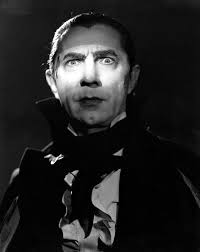


Although many production companies use this stereotype of a vampire, there are films that have challenged this to suggest that they are not antagonists and can be normal people like anyone else. An example of a film that has twisted the stereotype would be 'The Twilight Saga'. The writer of the books, Stephanie Mayer suggested that a vampire is like any other normal person and that the only difference is that they have to live off human blood.
However, she did stick with the stereotype that they have very pale skin and red eyes.

Another stereotypical representation of antagonists in the horror genre would be the middle aged man who has had a rocky childhood/ an event in his life that has made him turn into a killer or psychopath. This character is usually a straight male rather than a female to show the dominance of the male population. However, it may be interpreted as others as portraying males to be antagonists and the women as being superior. Examples of typical antagonists in horror films could be characters such as 'Hannible Lector' in Silence of the Lambs or 'Jason Voorhees' from the film 'Friday the 13th'.
Maltese Falcon Film Noir Textual Analysis
‘The Maltese Falcon’ is a film noir that is set in the 1940’s
and made in 1941. We know that is a film noir as it has all of the basic
conventions of one. These would include things such as the main hook or enigma,
which in this case is a crime investigation, it plays with the good cop/bad cop
storyline as the main detective, ‘Detective Sam Spade’ and his partner,
Detective Miles Archer are working on a case that involves a young and
beautiful woman, who plays the ‘Femme Fatale’ and they are looking for a man
who supposedly has taken Mrs Wonderly (the Femme Fatale)’s sister. In the end,
Miles ends up being killed and Sam begins to show his true colours.
 The femme
fatale, in this film noirs case – Mrs Wonderly is a young woman who is usually
a ‘damsel in distress’. Her character is one that both of the detectives swoon
over which instantly in the film we see that both detectives will end up
arguing about her. She claims to be scared for her sister’s safety when a man
called ‘Thursby’ claims to have taken her and will not let her see her sister.
She pleads for the men’s help in finding her. During the scene where she enters
the office, there is a medium close up shot of Mrs Wonderly where she is
speaking to the men about her sister, however throughout this scene she is
unable to look either of the men in the eye which suggests that there is an
underlying issue that she may be trying to hide. This gives the audience an
insight on what is going to happen before the people in the film know. This is
an example of dramatic irony which does not happen very often in a film noir as
they usuaslly have restricted narration – where the audience knows only as much
as the detective. The suggestion that Mrs Wonderly is a femme fatale shows the
representation of women at the time. We see that women were inferior to men at
the time, there is another point in the film when Miles walks into the office
and both men stand up but Mrs Wonderly is left sitting that we see that she is
smaller than/inferior to the men. This may also give the audience an idea that
the film was very misogynistic as it portrays the woman to be the bad guy/ the
killer. The femme fatale is always the character in a film noir that gets the
men to do her dirty work for her and then ends up either dead or in jail.
The femme
fatale, in this film noirs case – Mrs Wonderly is a young woman who is usually
a ‘damsel in distress’. Her character is one that both of the detectives swoon
over which instantly in the film we see that both detectives will end up
arguing about her. She claims to be scared for her sister’s safety when a man
called ‘Thursby’ claims to have taken her and will not let her see her sister.
She pleads for the men’s help in finding her. During the scene where she enters
the office, there is a medium close up shot of Mrs Wonderly where she is
speaking to the men about her sister, however throughout this scene she is
unable to look either of the men in the eye which suggests that there is an
underlying issue that she may be trying to hide. This gives the audience an
insight on what is going to happen before the people in the film know. This is
an example of dramatic irony which does not happen very often in a film noir as
they usuaslly have restricted narration – where the audience knows only as much
as the detective. The suggestion that Mrs Wonderly is a femme fatale shows the
representation of women at the time. We see that women were inferior to men at
the time, there is another point in the film when Miles walks into the office
and both men stand up but Mrs Wonderly is left sitting that we see that she is
smaller than/inferior to the men. This may also give the audience an idea that
the film was very misogynistic as it portrays the woman to be the bad guy/ the
killer. The femme fatale is always the character in a film noir that gets the
men to do her dirty work for her and then ends up either dead or in jail.
The establishing shot which is set in the city of San
Francisco is very stereotypical to a film noir/ crime film. We also see that
the office is set in the city and the audience suspects that it is set in a
block of offices as we cannot see anything but sky out of the windows in the
office. Slightly later on in the film, we see Detective Spade’s apartment/flat.
It is very simple and we see that he does not have very much money as he lives
in an apartment and when the detectives come to question him about the murder,
he only has a small seat for them to share and he sits on his bed (which isn’t
made). This indicates that he is a very busy man and does not have time for
anything outside of work which could also be why there is no woman present.
The sound in the film is mostly diegetic as there is a lot of
dialogue between the two detectives and Mrs Wonderly. However after Detective
Archer is killed, there is a piece of music (non-diegetic) over the top of the
dialogue and film. This piece of music was mysterious and indicated that the
chase was now on, to find out who it was that killed Archer.
The editing in the film is very simple and is called
continuity editing. This is where each shot must follow each other to make the
film look as though it flows. During the time that the film was set and written
in, there was not very much advanced editing for films (which is part of why
the film noir genre exists). So the lighting is very low key to add the effect
of the black and white film noir. There are no tricks or colour editing in the
film which is why it is simple and called ‘continuity editing’.
 Both of the
detectives are very stereotypical to the film noir genre. We see this as soon
as the film starts when Detective Spade begins to roll a cigarette in his office,
this indicates that the film was made around that time as usually, people
wouldn’t smoke inside, especially if they have guests as it is considered
dangerous and rude. Again, this is another indication that Spade is very
relaxed and emotionless as he doesn’t really seem to care, we also see this
when Mills walks into the room when Spade is speaking to Mrs Wonderly.
Instantly, Archer is swooning over Wonderly and he doesn’t hide it even though
he has a wife whereas Spade is very collected and relaxed although we still see
that he shows some interest in her. When Archer is killed and Spade goes out in
the middle of the night to see what happens, he is wearing a suit with a trilby
hat and an overcoat/mac. This is a stereotypical attire for characters such as
detectives in Film noirs. Mrs Wonderly also describes Floyd Thursby to have
‘Dark hair and Bushy eyebrows’ and to be wearing a ‘Grey suit and hat’. This is
again a stereotype of the detectives at the time but it could also be Mrs
Wonderly suggesting that the detectives are just like any other bad gut which
indicates that she has an underlying plot against them.
Both of the
detectives are very stereotypical to the film noir genre. We see this as soon
as the film starts when Detective Spade begins to roll a cigarette in his office,
this indicates that the film was made around that time as usually, people
wouldn’t smoke inside, especially if they have guests as it is considered
dangerous and rude. Again, this is another indication that Spade is very
relaxed and emotionless as he doesn’t really seem to care, we also see this
when Mills walks into the room when Spade is speaking to Mrs Wonderly.
Instantly, Archer is swooning over Wonderly and he doesn’t hide it even though
he has a wife whereas Spade is very collected and relaxed although we still see
that he shows some interest in her. When Archer is killed and Spade goes out in
the middle of the night to see what happens, he is wearing a suit with a trilby
hat and an overcoat/mac. This is a stereotypical attire for characters such as
detectives in Film noirs. Mrs Wonderly also describes Floyd Thursby to have
‘Dark hair and Bushy eyebrows’ and to be wearing a ‘Grey suit and hat’. This is
again a stereotype of the detectives at the time but it could also be Mrs
Wonderly suggesting that the detectives are just like any other bad gut which
indicates that she has an underlying plot against them.
The running theme of the film noir is a crime investigation.
In this film noir, it uses private detectives and detectives rather than police
as it allows the director to be inventive and creative as detectives are
allowed to do much more digging and do more dirty work than police. The
character or Spade takes on this persona and as we later find out has a lot of
secrets and is hiding a lot as he is supposedly having an affair with Miles’
wife which is why he does not phone her directly when he was killed. When he
went to the scene of Miles’ murder, Sam declined seeing the body before it was
taken away and did not speak directly to Miles’ wife. This would then raise
suspicions with the police as it is made to look as though it was Spade that
killed Miles. This scene shows us that there is more than meets the eye with
Sam as he is a very secretive and emotionless character in the film. This again
has the conventions of a film noir as there is always a problem with the main
characters. We also see that the femme
fatale, (Mrs Wonderly) is English. At the time, English people were considered
as very classy and posh. If the character or Mrs Wonderly spoke with a New York
or Jersey accent, she would not be treated the same as how she is treated
because she is English. The English were considered to be very classy and of a
high status so were treated with respect in America which is why both of them
men swooned over her in the film and she was treated with respect and as a
lady. This is also one of the reasons that neither of the detectives suspected
that she would be an antagonist because she seemed classy and respectful so
would not be assumed to be a killer.
In
conclusion, The Maltese Falcon has many elements of a film noir such as the
stereotypical manner of the detectives, (the trilby, suit and overcoat), the
‘Femme fatale’, (the female character that begins being beautiful and innocent
but ends up being the spider with the web and either ends up dead or in jail),
The setting of the city, the black and white film and low key lighting to add
effect and the storyline of the good cop/bad cop crime investigation
Wednesday, 9 December 2015
The script for my Opening Scene (To Kill A Dead Girl)
TRANSITION IN
STUDIO LOGO FADES IN/OUT
INT. House/living room. The room is dark but the lighting is natural. Camera pans on to features of a dead body (lucy) -covered in blood. [Title screen begins]
Her arms are bruised and her legs are cut.
Camera then pans to her face and slowly gets closer until it is just focusing on her eyes - they are closed to show that she is dead.
Transitions to her opening her eyes, but she is in a different room - appears to be waking up. (rewind to before she was dead.)
She puts her feet over the side of her bed, turns off her alarm and puts on some slippers. (shows normality - how her morning routine is the same as anyone else. She appears to be a normal, average girl.)
Forward tracking on camera - follows her into bathroom. She plays with her hair and turns around so that she can see that she is not bruised to then transition into a filtered shot which appears as a flashback. We see the character covered in bruises and clearly upset, SAME FILTER AS OPENING. [title sequences here]
Filter returns to normal, signifying back to normality.
We next see her in the kitchen, she is fully dressed with her hair tied in a tight ponytail and has make up on. She proceeds to get a glass out of the cupboard but puts it down onto the counter with a thud.
[Sound effect of glass banging].
[FILTERED SHOT] - flashback
She falls to the floor - a loud bang (the same as the sound of the glass). she tried to get up but is disorientated - Slow motion for added tension.
[Sound effects - sound of a hearbeat in the background with a buzzing noise to show that she is frail and in pain.]
Camera fades to black. FADE IN - she grabs the key off the side but hesitates/pauses before she picks it up. Another flashback [FILTERED] Character is being strangled and her throat is being cut with the same key - clearly a male strangling her. Blood is pouring down her throat.
Black screen
[Back to reality] character grabs key and locks door - as the door closes the shot ends and the title screen shows.
Tuesday, 8 December 2015
Mr Judge Feedback
Please see previous feedback on essential tasks that need completing including the Seven analysis, horror opening analysis and stereotypical representations of gender
Also in addition we need your class evidence of designing studio logos, title sequence order evidence and your assessment of data from the BFI statistical yearbook 2014 (pages 34-41)
http://www.bfi.org.uk/statisticalyearbook2014/
Also in addition we need your class evidence of designing studio logos, title sequence order evidence and your assessment of data from the BFI statistical yearbook 2014 (pages 34-41)
http://www.bfi.org.uk/statisticalyearbook2014/
Subscribe to:
Comments (Atom)